
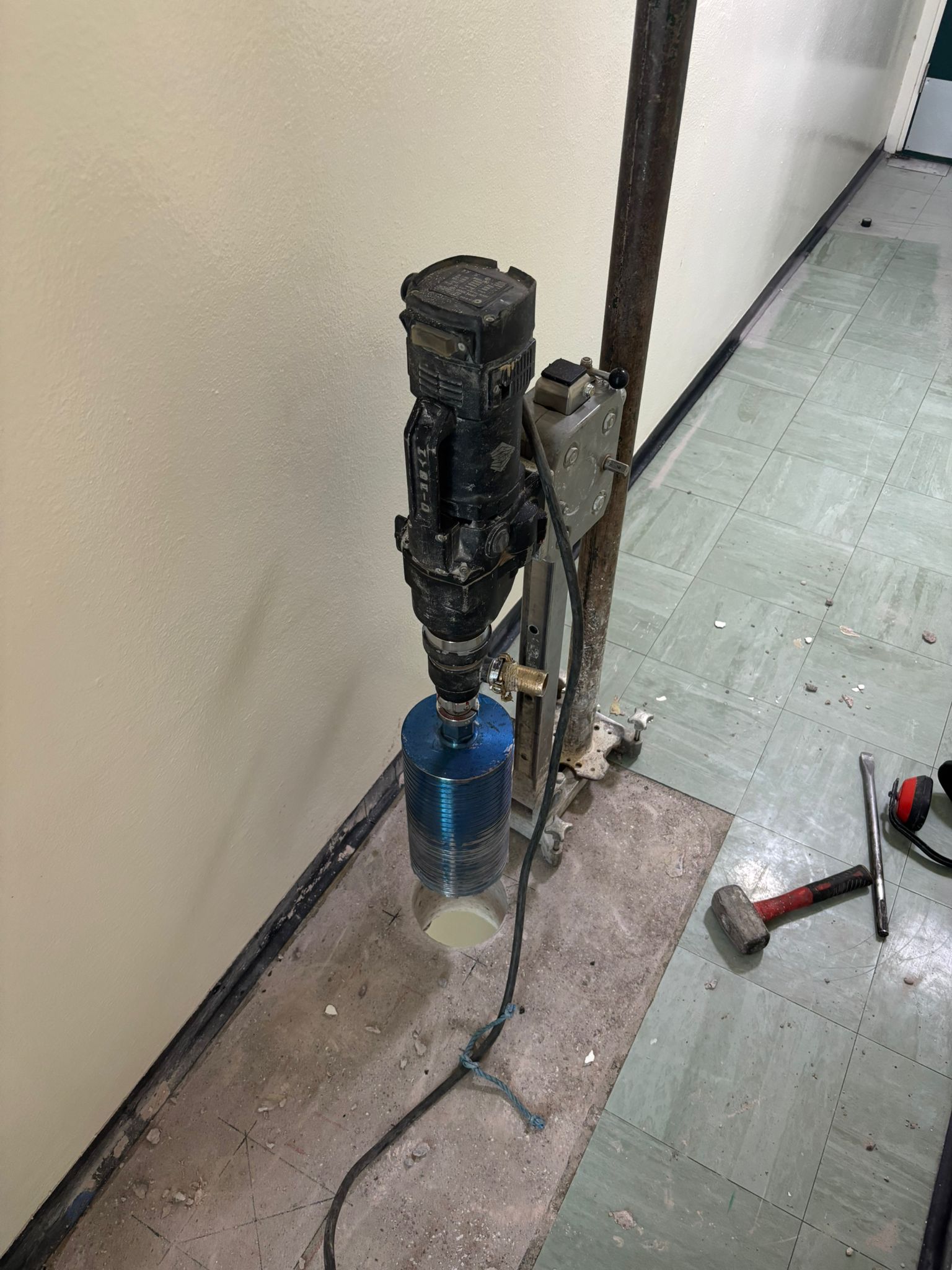
Core drilling is one of those methods where the condition of your equipment makes a noticeable difference. A good core drill bit should cut cleanly and consistently, whether you're creating an opening for pipework, ventilation or other building services. When that bit starts to wear, you'll usually know about it.
At DP Diamond Drilling, we've spent decades working with this equipment as part of our diamond drilling services, and we've seen what happens when a bit is pushed beyond the point where it's working effectively.
The good news is that a worn core drill bit doesn't always belong in the bin. Depending on its condition, repair or re-tipping may give it a new lease of life.
So, what should you be looking out for?
This is often one of the first things you'll notice. You know roughly how your equipment should perform, so if a job that would normally cut smoothly is suddenly taking much longer, something has changed.
As the diamond segments wear down, the bit can become less effective and you may find yourself applying more pressure to achieve the same result. That's not something we'd recommend simply working through.
Not only does it slow the job down, but continuing to push a worn bit can place additional strain on the equipment.
If there's been a noticeable change in performance, it's worth checking the bit before assuming the concrete is simply proving difficult.
If the equipment suddenly starts producing more vibration than you're used to, it's worth stopping to find out why. Core drilling should feel controlled.
Uneven wear, damage to the barrel or problems with the segments can all contribute. Whatever the cause, excessive vibration makes accurate drilling more difficult and can put unnecessary stress on the equipment.
Precision is a big part of our diamond drilling services, particularly when an opening has to be created to an exact size. If a drill bit is making that harder than it should be, it needs to be looked at.
Sometimes the easiest way to spot a problem is simply to look at the bit.
The diamond segments do the hard work, so they're naturally going to wear over time. What you're looking for is anything beyond the wear you'd normally expect: cracked or missing segments, uneven wear or visible damage around the cutting edge.
A diamond tip drill bit can sometimes continue cutting despite this damage, but that doesn't mean it should.
We've seen bits kept in service because they're technically still cutting, even though their performance has clearly dropped. Carrying on can turn something repairable into something that needs replacing completely.
Some heat during drilling is normal. A noticeable increase isn't something to ignore.
When a drill bit isn't cutting efficiently, additional friction can build up. That can mean more heat and additional stress on both the bit and the drilling equipment.
Anyone carrying out regular concrete drilling will get to know how their equipment normally behaves. If a bit suddenly starts running hotter under similar conditions, that's a useful warning that it's worth inspecting.
It doesn't automatically mean the bit has reached the end of its life, but it does mean we'd want to understand what's changed before putting it back to work.
How long a drill bit lasts depends on the materials it’s drilling, how frequently it's used, how it's operated and how well it's maintained. A drill bit regularly working through heavily reinforced concrete will have a very different working life from one used occasionally on less demanding materials.
But don't assume an old bit automatically needs replacing.
One thing we've seen throughout our time in the industry is perfectly usable drill barrels being discarded because the diamond segments have worn out.
If the barrel itself is still in good condition, re-tipping may be possible. New diamond segments can be fitted to restore the cutting edge and extend the useful life of the bit.
A drill bit is only one part of the equipment, but its condition affects the whole job.
When we're carrying out concrete drilling, we need equipment that cuts predictably and accurately. A worn bit can slow the work down, make precision more difficult and place unnecessary strain on the machinery.
There's also a financial reason to keep an eye on them.
Regular inspections give you a better chance of catching damage whilst there's still something you can do about it. Leave it too long and a relatively straightforward repair may become a full replacement.
The same principle applies whether you use one diamond tip drill bit occasionally or have a collection of core bits being used regularly across different sites.
There's no single answer because it depends on what's wrong with the bit.
If the barrel is in good condition but the diamond segments are worn, re-tipping could be the sensible option. More extensive damage, particularly to the barrel itself, may mean replacement makes better financial and practical sense.
That's where having someone assess the bit can help. Rather than automatically replacing it, you can find out whether there's useful life left in the equipment first.
At DP Diamond Drilling, we provide drill re-tipping and repair alongside our specialist drilling work, and we'll always look at whether refurbishment is worthwhile before recommending the next step.
If your core drill bit isn't performing as it used to, don't wait until it stops cutting altogether.
Here at DP Diamond Drilling, we provide professional drill repair and re-tipping services for suitable core drill bits, helping customers get more life from their equipment where possible.
If you're unsure whether your drill bit can be saved, get in touch with our team. We'll take a look at its condition and help you decide whether you need to repair, re-tip or replace.