
Sustainability is becoming a key consideration across the construction industry. From careful material sourcing, to smarter waste management, contractors and clients alike are looking for ways to reduce their environmental impact without compromising on quality or efficiency. But one area where this balance is already being achieved is water-based diamond drilling.
Diamond drilling has long been valued for its accuracy and control when drilling into concrete, masonry and stone. But when water is introduced into the process, the environmental benefits become even more significant. Compared with traditional drilling and cutting methods, water-based diamond drilling offers a cleaner, safer and more responsible approach to creating openings and holes in concrete structures.
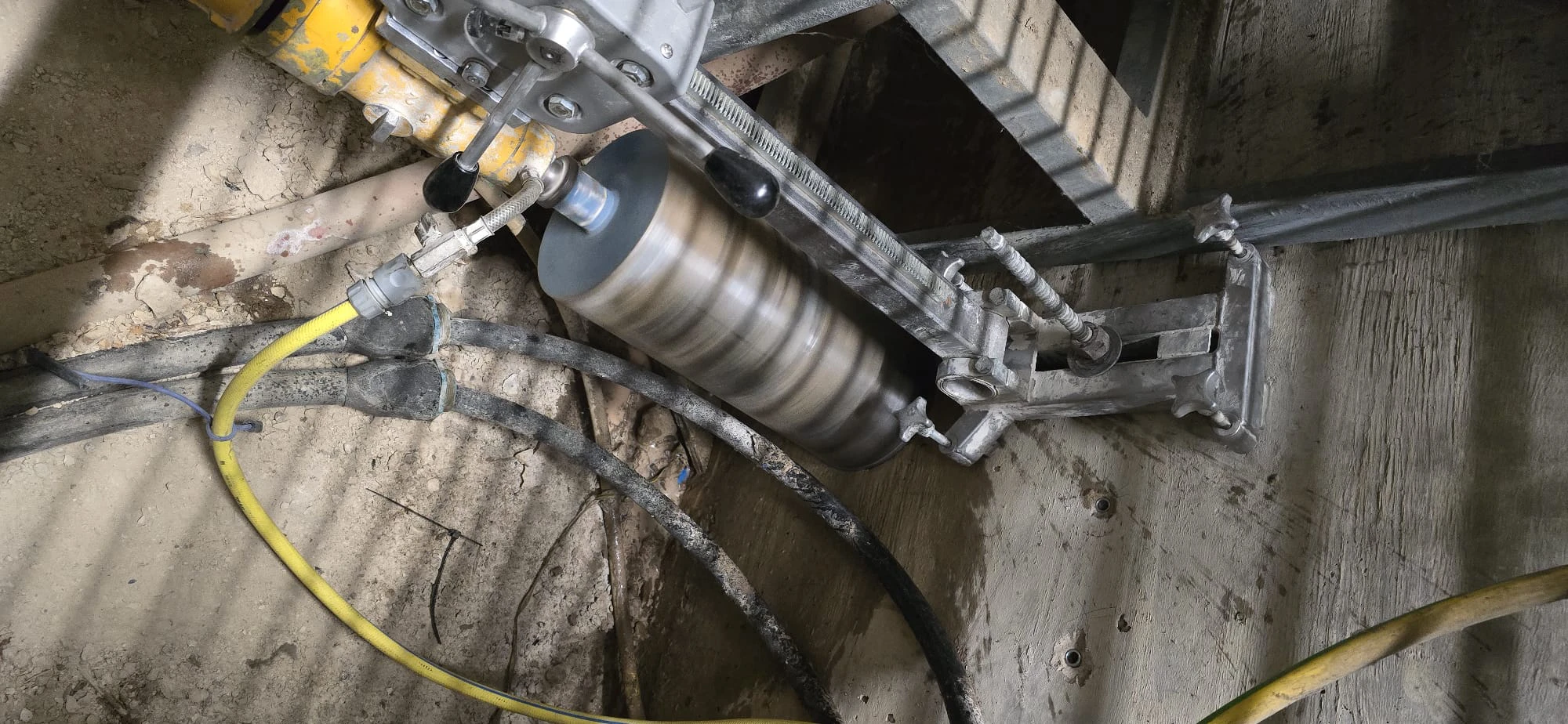
Water-based diamond drilling uses a diamond-tipped core drill combined with a controlled supply of water at the cutting point. Rather than relying on force or impact, the drill cuts smoothly through the material while the water cools the bit and manages the dust produced in the process, keeping your site clean and tidy throughout.
Professional diamond drilling contractors, like ourselves, tend to use this method because it improves performance, precision and efficiency. At the same time, it plays an important role in reducing the wider environmental footprint of construction work, particularly on commercial sites where large volumes of drilling are required.
One of the most immediate environmental benefits of water-based diamond drilling is dust suppression. Traditional dry drilling methods can release large amounts of fine particulate dust into the air, especially when drilling into concrete. This dust doesn’t just settle on surfaces, it can travel across sites and into surrounding areas - which can prove difficult to clean!
By using water throughout the drilling process, dust is captured at the source and prevented from becoming airborne. This improves air quality on site and reduces the spread of fine particles into neighbouring environments. Cleaner air benefits everyone involved, from site operatives to nearby occupants, and helps projects meet modern environmental and health standards.
For urban or sensitive locations, this is a must. Schools, hospitals, offices and residential areas all benefit from the reduced dust levels that water-based diamond drilling provides.
Another one of the environmental benefits of diamond drilling is the way in which materials are removed. Traditional drilling and breaking methods tend to produce loose debris and fractured concrete, which increases waste and can make recycling more difficult.
Diamond drilling, on the other hand, removes material in a controlled core. This means that the concrete can be managed more efficiently, with less unnecessary breakage and less waste overall. Where possible, clean concrete cores can be separated and recycled more easily than mixed rubble.
For projects focused on responsible waste management, this level of control is a major perk.
But, environmental impact isn’t limited to what can be seen. Noise and vibrations also play a role, particularly on busy commercial sites or in built-up areas.
Water-based diamond drilling is non-percussive, meaning it does not rely on hammering or impact. As a result, noise levels are significantly lower than many traditional methods. Reduced vibration also helps protect surrounding structures, limiting the risk of cracking or damage that can lead to further repairs and material use.
By minimising secondary damage, diamond drilling contractors help reduce the need for additional materials, transport and energy later on in the project.
When drilling into concrete, efficiency matters. Traditional methods often require more power and longer working times to achieve the same result, particularly when reinforcement is present.
Diamond drilling cuts cleanly through reinforced concrete without resistance from rebar or dense aggregates. Water cooling keeps the drill operating at optimal performance, reducing wear on equipment and limiting energy consumption over time.
Efficient tools working for shorter durations naturally consume less energy, which contributes to a lower overall environmental footprint for the task.
This is a common question, and the short answer is yes, particularly when the work involves structural or repeated drilling. Using water when drilling concrete offers benefits that go far beyond cleanliness.
Water reduces heat build-up, extends the life of drilling equipment, controls dust, and improves accuracy. From an environmental perspective, it also limits airborne pollution, reduces waste, and supports safer working practices. For these reasons, professional diamond drilling contractors almost always favour water-based systems over dry methods.
When comparing water-based diamond drilling with older drilling or cutting techniques, there are several stand-out benefits:
Each of these factors contributes to a more responsible approach to construction and renovation work.
Dust and debris generated during drilling can require extensive cleaning afterwards. This means additional water usage, chemical cleaners, and waste disposal, all of which add to environmental impact.
Water-based diamond drilling keeps work areas cleaner throughout the process. Because dust is managed as drilling takes place, there is far less residue left behind. This reduces the need for intensive cleaning and helps projects stay efficient while minimising unnecessary resource use.
For commercial projects operating on tight schedules, this also supports smoother handovers between trades.
Modern construction is increasingly focused on sustainability targets, whether they’re driven by regulations, client expectations or businesses’ internal environmental policies. Water-based diamond drilling fits naturally into this approach.
By minimising airborne pollution, limiting waste and improving energy efficiency, diamond drilling contractors can contribute positively to sustainability goals without requiring major changes to project planning. This is a great example of how specialist techniques can deliver both technical and environmental benefits.
While the environmental advantages of water-based diamond drilling are clear, they still rely on correct techniques. Poorly managed water use or incorrect equipment can undermine these benefits, and also result in your project not turning out exactly as you originally planned.
Experienced diamond drilling contractors, such as ourselves, understand how to control water flow, manage slurry responsibly, and adapt techniques to suit the site and material. This ensures that environmental gains are achieved without creating new issues such as excessive runoff or uncontrolled waste.
Choosing local diamond drilling specialists who are familiar with regional requirements and site conditions also helps ensure work is carried out responsibly and in line with best practice.
Working with local diamond drilling providers offers major advantages, including quicker response times and better site coordination. At the same time, established contractors bring consistent standards and proven methods to every project.
Professional diamond drillers combine technical knowledge with environmental awareness, ensuring that drilling into concrete is carried out efficiently, safely and with minimal impact on the surrounding area.
At DP Diamond Drilling, we use water-based diamond drilling techniques across our projects to deliver clean, controlled and environmentally responsible results. With decades of experience, our team understands how to balance technical precision with sustainable working practices.
We provide professional diamond drilling services across commercial sites nationwide, supported by skilled operatives and well-maintained equipment. By working with experienced diamond drilling contractors, you can be confident that drilling into concrete will be carried out efficiently, safely and with environmental impact kept to a minimum.
If you’d like to discuss a project or find out more about our approach, reach out to us today. We’re more than happy to help.